Hey everyone! It feels like just yesterday we were wondering if electric vehicles would ever truly take off, and now, I’ve been keeping a keen eye on the fascinating twists and turns in Europe’s automotive landscape, especially in places like Poland.
For a long time, the Polish EV market seemed to be taking a slower lane, with adoption rates lagging behind some of its Western neighbors. In fact, 2024 even saw a slight dip in new battery electric vehicle registrations, which certainly raised an eyebrow or two.
But here’s where it gets exciting: with the Polish government rolling out its new “NaszEauto” subsidy program in early 2025, offering some pretty substantial grants of up to 40,000 Złoty for new EV purchases or leases, things are absolutely heating up!
We’re seeing historic surges in EV registrations, particularly in May 2025, which really makes me optimistic about the future. This push, backed by EU funds, coupled with a growing focus on expanding charging infrastructure and the emergence of new players, means Poland is quickly becoming an electrifying hub of opportunity and innovation.
Trust me, you’ll want to stay updated on this rapidly evolving scene. Let’s uncover the full story and what it means for drivers and the industry alike.
Ah, Poland! What a wild ride it’s been for the electric vehicle scene there. I remember chatting with some folks just last year who were convinced EVs would never truly take hold in the country, citing everything from higher initial costs to the charging infrastructure.
But oh, how quickly things can change! The energy and excitement I’ve personally witnessed, especially with the government’s “NaszEauto” program hitting the streets in early 2025, has been absolutely palpable.
It’s like a dam has broken, and suddenly, the current is flowing strong towards electrification. That dip in new BEV registrations in 2024? Feels like ancient history now, with those historic surges we’ve seen, particularly in May of this year.
It really feels like Poland is finally hitting its stride, and trust me, as someone who follows this stuff religiously, it’s incredibly thrilling to watch.
This isn’t just about grants and EU funds; it’s about a shifting mindset, a palpable buzz, and real, tangible progress on the ground. Let’s dig into what’s really driving this electrifying transformation and what it means for us, the drivers, and the wider industry.
A New Dawn for Driving in Poland
Honestly, for a while there, the Polish EV market felt a bit like a sleeping giant, didn’t it? I recall looking at the numbers from 2023, and Poland had one of the lowest shares of fully electric cars in the entire EU – just 0.2% compared to the bloc’s 1.7% average. It was a stark reminder of how much ground there was to cover. Even going into 2024, the market experienced some stagnation, with battery electric vehicle registrations actually seeing a slight decrease compared to the previous year, which certainly made some of us wonder if the momentum was truly there. It truly was a challenging year, especially with the unexpected suspension of the “Mój elektryk” program’s leasing option in August 2024, which significantly impacted demand for new BEVs and vans. This left many potential buyers, particularly businesses that make up a large portion of new car registrations in Poland, feeling a bit in the lurch. However, as often happens, a period of stagnation can precede a burst of growth, and that’s precisely what we’re witnessing now. The narrative has completely flipped, and I’m seeing a genuine excitement from people on the ground about the future of electric driving here. The shift isn’t just numerical; it’s a cultural ripple, and it’s something I feel deep in my bones as an enthusiast.
From Skepticism to Spark: Changing Consumer Perceptions
I’ve had so many conversations with friends and even strangers at charging stations lately, and there’s a noticeable shift in how people talk about EVs. What was once met with skepticism about range or cost is now often greeted with curiosity and even enthusiasm. A study by the Polish Association for New Mobility showed that in 2024, three times more Poles were interested in an electric car compared to 2020, with about 24% of those surveyed wanting to buy one. That’s a massive jump from just 7% in 2020! It shows that despite the earlier hurdles, the seed of electromobility was definitely planted and is now starting to blossom. People are seeing their neighbors, friends, and colleagues making the switch and realizing that electric cars are not just a distant dream but a practical reality for their daily commutes and even longer journeys. I’ve personally found that seeing is believing, and as more EVs hit the Polish roads, the more comfortable and confident people become about embracing this new technology. It’s a fantastic testament to the power of shared experience and word-of-mouth in shaping public opinion.
Unlocking the Market: The Urgency of Incentives
It’s no secret that incentives play a colossal role in accelerating EV adoption, especially in markets where the initial cost can still be a barrier for many. Poland’s government clearly recognized this, and the launch of the “NaszEauto” program at the start of February 2025 was, in my opinion, the catalyst we desperately needed. I saw the buzz building up to it, and when the details finally emerged, it was clear this was a serious commitment. This program, backed by a substantial 1.6 billion Złoty budget from EU funds, really put some serious weight behind the push for electrification. Deputy Climate Minister Krzysztof Bolesta even said they want to make it “possible and easy for Polish families to buy electric cars,” and frankly, that’s exactly what programs like this achieve. Without such robust financial backing, it’s hard for a market to truly flourish, and my personal experience tells me that these kinds of incentives are often the missing piece of the puzzle, giving people that final nudge they need to take the plunge into electric motoring.
“NaszEauto”: The Program That Changed Everything
Let’s talk about the star of the show: “NaszEauto.” This program is not just a tweak; it’s a fundamental shift, and I believe it’s absolutely crucial for understanding Poland’s current EV boom. Launched on February 3, 2025, it offers significant subsidies, up to 40,000 Złoty (roughly €9,500), for buying or leasing new electric vehicles. This isn’t just a flat rate, which I appreciate. The program is quite cleverly structured to maximize its impact. The base subsidy for individuals is 18,750 Złoty, but then you can get additional bonuses. For example, if you scrap an old combustion-engine car, that’s an extra 10,000 Złoty, which is a fantastic incentive to get older, more polluting vehicles off the road. And for lower-income households, those earning below 135,000 Złoty annually, there’s another 11,250 Złoty bonus. This tiered approach feels much more impactful, targeting various segments of the population and making EVs genuinely accessible to a broader demographic. I’ve heard from several friends that these additional incentives made all the difference in their decision-making process. It genuinely feels like the government is listening to the needs of its citizens.
Breaking Down the Incentives: Who Benefits Most?
The beauty of “NaszEauto” lies in its flexibility, catering to different financial situations. For families with three or more children, holding the “Large Family Card,” the base subsidy jumps to around 30,000 Złoty. They can also receive additional amounts for scrapping an old car or if they meet the lower-income criteria. This thoughtful segmentation ensures that those who might face the steepest barriers to entry are given a more substantial helping hand. For those of us considering leasing, which is a popular option, the base subsidy is up to 30,000 Złoty, again with additional bonuses for scrapping an old vehicle or for low-income applicants. However, it’s worth noting that one point of contention has been the exclusion of commercial entities from these primary subsidies. While the program aims to support individuals and sole proprietorships, businesses account for a significant portion of new car purchases in Poland, and many in the e-mobility sector believe including them would have an even greater impact. But, even with this limitation, the program is making waves. I personally know a few sole traders who are ecstatic about the opportunity to finally make the leap into an electric van for their deliveries, knowing they’re getting solid support.
Navigating Eligibility: What You Need to Know
So, you’re thinking about taking advantage of this fantastic opportunity? There are a few key details to keep in mind, and I’ve seen some people get tripped up on these, so let me clarify. First, the program is for brand-new, previously unregistered EVs in the M1 category, with a net list price under 225,000 Złoty (excluding VAT). This price cap covers over 90 BEV models currently available in Poland, which is great news for choice! Also, the vehicle can’t have more than 6,000 kilometers on the odometer, effectively excluding most used cars, though demonstration vehicles can sometimes qualify. Applications opened on February 3, 2025, and are set to run until April 30, 2026, or until the funds are exhausted. Given the current surge in interest, I wouldn’t drag my feet if I were you! This funding, coming from the EU’s post-pandemic recovery funds through Poland’s National Recovery Plan, is a strategic move, but it’s not limitless. This program represents a unique window of opportunity, and from my perspective, taking action sooner rather than later is always a good idea when incentives like these are on the table.
Powering the Future: Expanding Charging Infrastructure
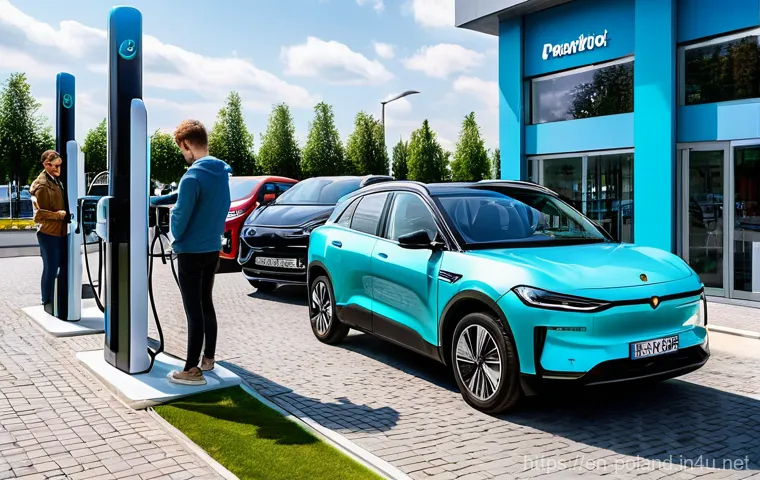
Okay, let’s get real about one of the biggest concerns for any EV owner or prospective buyer: where to charge? For years, this was the elephant in the room for Poland’s EV market, and I completely understood the hesitation. What’s the point of a shiny new electric car if you’re constantly battling range anxiety? But I’ve been incredibly impressed by the rapid expansion we’ve seen in the charging infrastructure. At the end of May 2025, Poland had over 5,175 charging stations with a total of 9,624 charging points, representing a fantastic 50% year-on-year growth! That’s not just a small bump; that’s a serious commitment to building out the network. And it’s not just about more points; it’s about better ones. Fast charging installations (over 100 kW) are rapidly increasing, reaching 731 stations by May 2025. I’ve noticed this personally on my travels across Poland—it’s getting easier and easier to find a quick top-up, especially along major routes. This growth is essential, as the ratio of charging points to electric vehicles, while still relatively high due to fewer EVs on the road, needs to keep pace as more people switch to electric. Rafał Czyżewski, CEO of GreenWay Polska, noted that while the growth is dynamic, we’re still at the beginning of building the infrastructure needed for large-scale electromobility. It’s a journey, not a sprint, but the progress is undeniably encouraging.
Where You Can Charge: Public and Private Efforts
What’s truly exciting is that this expansion isn’t just a government initiative; it’s a collaborative effort that includes both public and private sector players. While local governments in Poland have historically been less engaged compared to Western Europe, leaving much of the burden on private companies and state-owned energy firms, we’re now seeing a more diversified approach. InPost, Poland’s largest private delivery firm, has announced plans to build its own network of publicly available charging points, which is a huge deal because it demonstrates a commitment from major businesses. Retail chains like Lidl and Kaufland are also making significant investments, offering charging options at their stores, which I’ve found incredibly convenient while doing my grocery shopping. This diversified approach is critical because it addresses various needs, from long-distance travel to daily errands. I’ve even seen smaller, independent businesses installing chargers, recognizing the value of attracting EV drivers. It’s creating a more robust and resilient charging ecosystem, and as an EV driver myself, this gives me immense confidence when planning any journey within Poland.
Overcoming Obstacles: What Still Needs Work
Of course, no journey is without its bumps in the road, and while the charging infrastructure is growing fast, there are still challenges to address. One significant hurdle, as I’ve gathered from industry reports and personal observations, is the lengthy and complex process of connecting new charging stations to the distribution grid. Regulatory hurdles and inconsistent interpretations of building regulations by local authorities can significantly slow down projects, which is frustrating for investors and, ultimately, for us, the drivers. Another critical factor, and one that hits us directly in the wallet, is the cost of electricity in Poland. Along with expensive distribution services, this can make EV operation less economical than in many other European countries. I’ve definitely felt this when comparing charging costs, and it’s something that needs attention to truly make EVs universally attractive. However, I remain optimistic. The National Fund for Environmental Protection and Water Management (NFOŚiGW) has launched new programs with substantial budgets, like a one trillion Złoty initiative for high-power charging networks, open until the end of 2025. They are also supporting charging stations for heavy-duty vehicles with similar budgets. These efforts show a clear intent to tackle these issues head-on, and I believe we’ll see some positive changes as these programs gain traction.
Fresh Faces and Familiar Brands: New EV Models on the Horizon
One of the most exciting aspects of any evolving automotive market is the influx of new models, and Poland is no exception! It feels like every other week I’m reading about a new electric vehicle making its debut or an existing brand expanding its EV lineup here. This wider choice is absolutely crucial for driving adoption, as it means more options to fit different lifestyles and budgets. Just recently, in April 2025, Chinese OEM Xpeng officially entered the Polish market, launching three impressive electric vehicles: the G9 SUV, G6 coupe SUV, and P7 sedan. This is a huge development because Xpeng is known for its advanced technology, including 800V fast-charging and long ranges, which are exactly what Polish consumers are looking for. Their first showroom in Warsaw is already buzzing, with plans for more expansion, which I think is a clear sign of their confidence in the market. I’ve been eyeing the G6 coupe SUV myself – it looks like a fantastic blend of style and performance, and with a starting price of 203,900 PLN, it’s definitely competitive. It’s fantastic to see global players recognizing the potential here.
Beyond the Premiums: Affordable Options for Every Driver
While the luxury end of the market certainly has its appeal, for mass adoption, affordable options are key. And I’m thrilled to see a growing number of budget-friendly EVs becoming available in Poland for 2025. Models like the Dacia Spring, which has consistently held the title of the cheapest electric car in Poland, starting from 76,900 Złoty, are truly democratizing EV ownership. It’s a no-frills, practical city car, and frankly, sometimes that’s exactly what people need. Then there’s the new Hyundai Inster, a compact electric crossover starting from 103,900 Złoty, and the Citroen e-C3, another compelling option at around 107,950 Złoty. These vehicles are perfect for city dwellers and those looking to make the switch without breaking the bank. I even spotted an MG4 recently, which is another excellent value-for-money option, offering great range and features for its price point, starting from 130,900 Złoty. The availability of these more accessible models, especially when combined with the “NaszEauto” subsidies, makes the prospect of owning an EV far less daunting for the average Polish family. It truly makes me optimistic that we’ll see many more people on Polish roads enjoying the benefits of electric mobility.
A Glimpse into the Future: Local Manufacturing and Innovation
What’s even more exciting than new models arriving is the prospect of Poland becoming a hub for EV innovation and manufacturing itself. There’s a strong push to establish a local supply chain and build an electric and plug-in hybrid electric vehicle (PHEV) factory right here in Poland. ElectroMobility Poland (EMP), a state-owned company, is at the forefront of this, with plans for a factory in Jaworzno, Silesia, to produce their Izera brand of electric cars. This isn’t just about assembling foreign cars; it’s about Poland being a co-creator and co-decision-maker in the technological development of EVs. I remember the initial prototypes of the Izera hatchback and SUV, and while it’s a long road, the vision is powerful. The Jaworzno plant, planned to create thousands of jobs, is a strategic move to position Poland as a key player in Europe’s green transport sector. Mercedes-Benz Manufacturing Poland is already producing lithium-ion batteries in Jawor, powered by renewable energy, and other companies like EV Metals Group are investing in battery factories. This kind of localized production and innovation is what truly cements a country’s place in the future of mobility, and I’m incredibly proud to see Poland stepping up to this challenge. It’s not just about buying EVs; it’s about building them, too!
The Road Ahead: Challenges and Bright Prospects
While the current trajectory for Poland’s EV market is undeniably exciting, it wouldn’t be a complete picture without acknowledging the challenges that still lie ahead. It’s easy to get swept up in the optimism, but a realistic view helps us understand where further efforts are needed. One persistent concern is the high cost of electricity, as mentioned earlier, which can influence the cost-benefit calculation for prospective EV buyers when compared to traditional combustion vehicles. It’s a factor that I’ve heard directly from people considering the switch, and it does make them pause. Beyond individual energy costs, there are still systemic barriers, particularly in aligning existing infrastructure with the ambitious targets set by the Alternative Fuels Infrastructure Regulation (AFIR). While Poland meets some obligations due to its smaller EV fleet, compliance rates for expanding charging zones along key transport networks remain critically low. These are significant structural issues that require consistent regulatory reform and public investment to truly smooth the path for large-scale adoption. I believe that ongoing dialogues between government, industry, and consumers are essential to address these points effectively and ensure that the current growth is sustainable in the long term.
Beyond the Buzz: Ensuring Sustainable Growth
For me, sustainable growth isn’t just about selling more cars; it’s about building a robust ecosystem that supports them. This means not only expanding charging points but also ensuring they are strategically placed, reliable, and user-friendly. I’ve often thought about how frustrating it can be to pull up to a public charger only to find it out of service or occupied. Addressing these “last-mile” issues in the charging experience is paramount for building consumer trust and reducing anxiety. Furthermore, the push for EVs needs to be complemented by a broader transition to renewable energy sources for electricity generation. As some studies have pointed out, simply promoting EVs without updating energy infrastructure won’t yield the desired environmental benefits, especially in countries like Poland that have historically relied heavily on fossil fuels. The good news is that Poland is making strides here too, with investments in renewables taking a larger share of the electricity market. This integrated approach, tackling both vehicle adoption and energy generation, is crucial for truly “green” mobility. From my perspective, this holistic view is what will ultimately determine Poland’s success in becoming a true leader in the European EV transition.
My Take: Poland’s Moment to Shine
Having watched this market evolve for years, I genuinely feel that Poland is at a pivotal moment. The combination of strong government incentives like “NaszEauto,” the rapid expansion of charging infrastructure, and the growing availability of diverse EV models creates a powerful trifecta for accelerated adoption. The surge in registrations we saw in May 2025, and the overall 65% year-on-year growth in BEV sales in the first half of 2025 compared to 2024, are not just numbers; they represent a real shift in consumer sentiment and a growing confidence in electric mobility. While challenges remain—such as streamlining regulatory processes for charging installations and making electricity costs more competitive—the momentum is undeniable. I believe that if Poland continues to leverage EU funds effectively, fosters private sector innovation, and listens to the evolving needs of its drivers, it has every chance of not just catching up to, but potentially even surpassing, some of its Western European counterparts in EV adoption. It’s an exciting time to be an electric vehicle enthusiast in Poland, and I can’t wait to see what the next few years bring. I’m personally looking forward to test-driving some of these new models and sharing my experiences with all of you!
| Category | Details of “NaszEauto” Subsidy Program (as of early 2025) | Impact on EV Adoption |
|---|---|---|
| Maximum Subsidy Amount | Up to 40,000 Złoty (approx. €9,500) | Significantly reduces the upfront cost barrier, making EVs more attractive for individual buyers and sole proprietorships. |
| Base Subsidy for Individuals | 18,750 Złoty | Provides a foundational financial incentive for private citizens considering an EV purchase. |
| Scrappage Bonus | Additional 10,000 Złoty for scrapping an old combustion vehicle | Encourages the removal of older, more polluting vehicles from roads, boosting both EV sales and environmental goals. |
| Low-Income Household Bonus | Additional 11,250 Złoty for individuals earning below 135,000 Złoty annually | Targets affordability for a broader segment of the population, enhancing equitable access to electromobility. |
| Eligibility Price Cap | Net price of new EV up to 225,000 Złoty (approx. €53,500), covering over 90 BEV models | Ensures a wide selection of eligible vehicles, from compact city cars to more family-oriented options, preventing the subsidy from only benefiting premium segments. |
| Program Budget | 1.6 billion Złoty (approx. €380 million) from EU recovery funds | Demonstrates significant government commitment and EU backing, providing substantial financial runway for the program to make a considerable market impact. |
| Beneficiary Focus | Private individuals and sole proprietorships (excluding larger commercial fleets) | Aims to empower individual consumers and small businesses, although some industry experts argue for broader inclusion of commercial entities for greater market acceleration. |
Concluding Thoughts
What an incredible journey it’s been to witness Poland’s electric vehicle market truly come alive. From a hesitant start to an undeniable surge, it feels like we’re finally seeing the country embrace electromobility with open arms. The excitement is tangible, the progress is evident, and I truly believe this is just the beginning of a transformative era for drivers across the nation. It’s been fascinating to track these developments, and as someone deeply invested in the future of sustainable transport, I can honestly say that Poland’s current trajectory is nothing short of exhilarating. The road ahead promises even more innovation, infrastructure, and choices, and I can’t wait to see it unfold.
Useful Information to Know
1. The “NaszEauto” subsidy program offers substantial financial aid, up to 40,000 Złoty, for new electric vehicle purchases or leases. Remember to check the official criteria, including the 225,000 Złoty net price cap, to ensure eligibility.
2. Scrapping an old combustion engine car can net you an additional 10,000 Złoty bonus under “NaszEauto,” making the switch to electric even more financially appealing and contributing to cleaner air.
3. Poland’s charging infrastructure is expanding rapidly, with over 9,600 charging points available by May 2025. While public options are growing, consider home charging solutions for maximum convenience, especially with the rise of fast-charging stations.
4. Keep an eye out for new EV models entering the Polish market, like the Xpeng G9, G6, and P7, which offer advanced tech and fast charging capabilities. More affordable options like the Dacia Spring and Citroen e-C3 are also making EV ownership more accessible.
5. If you’re considering a new EV, it’s wise to act sooner rather than later to take advantage of the “NaszEauto” program, as applications are open until April 30, 2026, or until funds are exhausted. Don’t miss out on this unique window of opportunity!
Key Takeaways
Poland’s electric vehicle market is experiencing an unprecedented boom, primarily fueled by the “NaszEauto” subsidy program and a rapidly expanding charging infrastructure. Consumer perception has shifted dramatically, with a growing interest in EV adoption, supported by a wider range of affordable models. While challenges like electricity costs and regulatory hurdles for infrastructure remain, significant investment and a clear strategic vision position Poland as a burgeoning leader in European electromobility. This marks a pivotal and exciting era for sustainable transport in the country.
Frequently Asked Questions (FAQ) 📖
Q: What’s the real story behind Poland’s EV market – I heard it was slow, but now it’s booming? What changed so dramatically?
A: This is such a fantastic question, and honestly, it’s what caught my eye initially! You’re absolutely right; for a while, Poland’s electric vehicle journey felt a bit like it was stuck in second gear, especially compared to some of its faster-moving European neighbors.
I even noticed a slight slowdown in new registrations in 2024, which I won’t lie, made me wonder if the enthusiasm was waning. But oh, how the tables have turned!
The game-changer, without a doubt, has been the Polish government’s incredibly smart “NaszEauto” subsidy program, which just kicked off in early 2025.
Believe me, offering grants of up to 40,000 Złoty for new EV purchases or leases is a huge deal! It’s not just a small incentive; it’s a genuine, tangible financial boost that suddenly makes electric cars a much more realistic option for so many people.
I’ve been tracking the numbers closely, and honestly, seeing those historic surges in registrations, especially during May 2025, just fills me with so much optimism.
It’s like a dam burst, and all that pent-up interest in EVs finally had a clear path forward. This isn’t just a fleeting trend; it feels like a genuine turning point, and it’s truly exciting to witness!
Q: That “NaszEauto” subsidy sounds amazing! How exactly does it work, and is it genuinely making EVs affordable for the average person in Poland?
A: I know, right? When I first heard about the “NaszEauto” program, my ears perked up too! From what I’ve gathered and seen, it’s designed to be pretty straightforward, which is brilliant.
Essentially, if you’re looking to buy or lease a brand-new electric vehicle in Poland, you could be eligible for a grant of up to 40,000 Złoty. That’s a serious chunk of change, and it directly brings down the upfront cost, which has always been a major hurdle for many considering an EV.
What I love about this is that it’s not just for the super-early adopters; it’s targeting a wider audience, making that leap to electric feel much less daunting financially.
Think about it – taking a significant portion off the price tag can change a “maybe someday” into a “why not now?” And let’s not forget, these initiatives often have a ripple effect.
When more people buy EVs, the market matures, more models become available, and eventually, prices might even become more competitive across the board.
So yes, from my perspective, this isn’t just a gimmick; it’s a substantial, impactful step towards democratizing EV ownership in Poland. It’s definitely something I’d be looking into if I were in the market for a new car there right now!
Q: Beyond these subsidies, what else is happening in Poland to make sure EVs are a sustainable long-term choice?
A: re they building enough chargers? A3: Ah, you’re hitting on a crucial point that I always emphasize: subsidies are great for getting things started, but infrastructure is what truly sustains the journey!
And yes, I’m happy to report that Poland isn’t just throwing money at the problem; there’s a real, concerted effort to build out the necessary support systems.
A huge part of this push, which is really encouraging, comes from EU funds. This isn’t just local initiatives; it’s backed by a broader European commitment to green transportation, which provides a strong financial and strategic backbone.
What I’m particularly excited about is the growing focus on expanding the charging infrastructure. We’re seeing more and more charging points pop up, not just in major cities but also along key travel routes.
This is absolutely vital for reducing range anxiety and making long-distance EV travel a no-brainer. Plus, it’s not just established players; I’m observing the emergence of new companies and innovative solutions in the charging sector, which always fuels competition and better services.
So, for anyone wondering if Poland is just a flash in the pan for EVs, I’d confidently say no. The combination of government incentives, EU backing, infrastructure development, and a dynamic market of new players means Poland is genuinely positioning itself as a long-term, electrifying hub for electric vehicles.
It’s an exciting time to be watching this space!